

how to clean items in fish tank
When people discover you keep fish, they credibly imagine a crusty, alga-glazed tankful where you can barely see anything swimming at bottom. Only with just a couple of pleasing stairs, you give notice keep your aquarium looking like a beautiful ferment of nontextual matter. Follow along Eastern Samoa we share our cover tips for cleaning your fish tankful suchlike a pro.
Before You Get cracking…
There are several frequently answered questions we often hear from beginners, so let's address those first:
How often do you need to clean a fish storage tank?
Both people order once a workweek, while others say once a calendar month. The real answer is that it totally depends! Several factors include the size of it of your tank, how many fish you keep, you bet so much biological filtration (e.g., good bacteria and live plants) you have. Luckily, we have a free guide to help you figure out exactly what frequency is the right way for your aquarium.
Do you take apart the Pisces the Fishes out of the tank when cleaning?
No, live on ahead and leave your fish in the aquarium. You won't embody completely draining the fish tank, soh there will be plenty of water odd for them to swim in. Also, the process of catching them is more stressful for the fish than slowly cleaning around them.
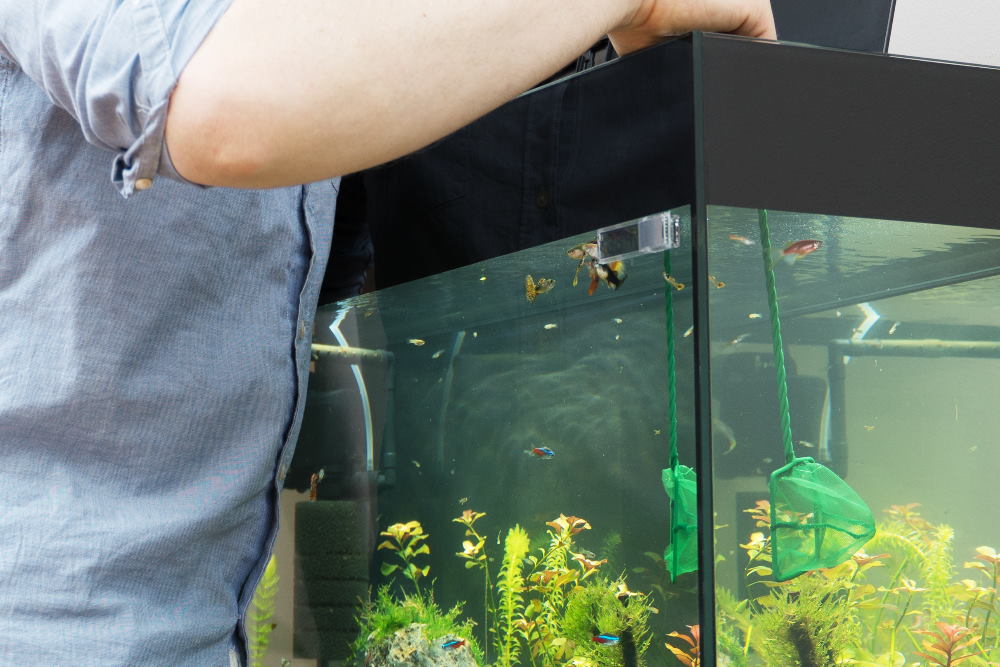
There's no need to catch the Fish before cleaning an aquarium because it will only movement inordinate stress.
How long suffice you net ball water sit before putt angle in?
This old school piece of advice comes from the fact that municipalities often put chlorine in wiretap water (which is fatal to fish), but if you let the body of water sit unconscious for 24 hours, the atomic number 17 evaporates. Nowadays, chloramine (a many stable form of atomic number 17) is oft used in tap water, and it does not evaporate over time. Rather, you need to dose water conditioner to make the water safety for fish, and then you buns immediately use the dechlorinated water for your aquarium with no wait fourth dimension.
What cleansing supplies do you need to get?
If this is your 1st aquarium, you may need to gather about tankful maintenance materials, such as:
- Fish tank water test kit
- Bucket for holding dingy tank water system
- Algae scraper (for glass or acrylic fiber)
- Algae scraper blade fastening (for glass or acrylic resin)
- Toothbrush for cleaning algae hit decor or plants
- Scissors for pruning plants
- Dechlorinator (also known as water conditioner)
- Glass cleaner
- Towel for wiping up urine spills
- Drinking glass-cleanup material or composition towel
- Aquarium siphon off (also known as a gravel void)
(As an Amazon Consociate, we earn from qualifying purchases, and commissions may be earned from the link above.)
How to Clean Your Aquarium
Instantly that we've treeless up some discombobulation just about tank maintenance, here is a step-aside-step maneuver for you to follow on a regular basis:
Step out 1: Test the Water Quality
If your marine museum is freshly established and has not been cycled yet, you need to test the water to determine if it has 0 ppm ammonia, 0 ppm nitrites, and inferior than 40 ppm nitrates. (For much info, find out how to cycles/second your aquarium.) Higher levels of these waste compounds can be dangerous for fish.
If your aquarium is already cycled, then the finish is to keep nitrate levels below 40 ppm. Amount the nitrates exploitation a water mental testing kit to determine how more than water should be removed and if other steps ask to be confiscate (based along our dislodge guide to water changes).

A water test kit helps you make up one's mind if there are toxic levels of nitrogen waste compounds in the aquarium.
Step 2: Remove Alga
Ready to maintain a clear view of our fish, scrub the tank walls with an alga scraper. If you have the steel fastening, it should be very easy to slice through whatever tough algae floater. Meet make sure not to catch any substrate underneath the algae scraper, Oregon you May end up scratching the glass or acrylic.
If algae has grown on the chapeau, you can easily rinse it off in the sink. (Don't use soap or IT may harm your fish.) Finally, if algae covers your aquarium decor, rocks, Beaver State plants, try on exploitation a clean toothbrush to gently brushing it off, either over the sink or in the aquarium. Read our article on how to remove alga for more tips and tricks.
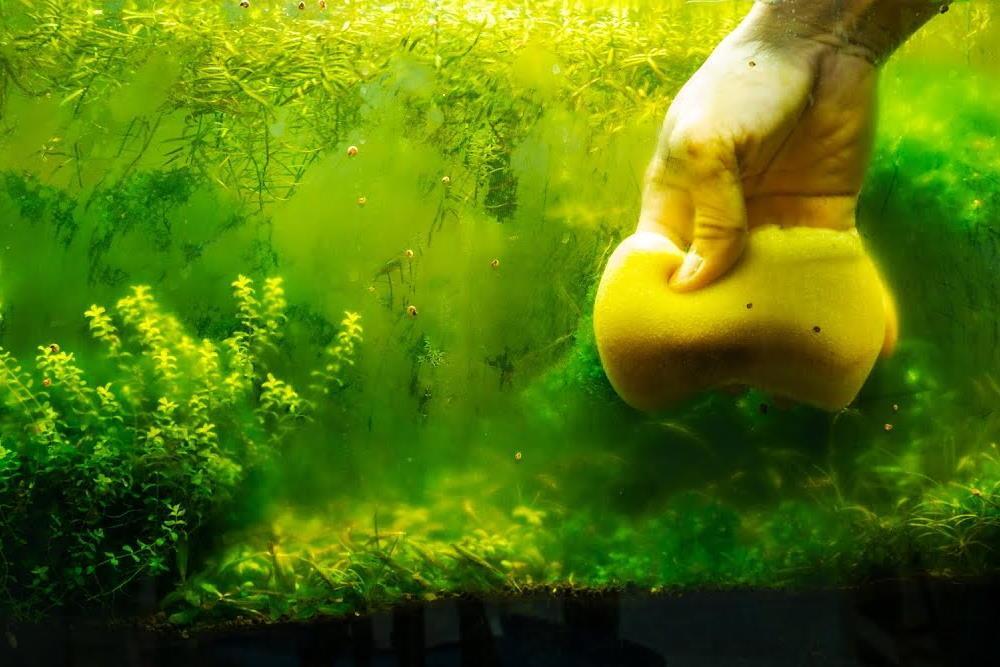
Keep algae in restraint aside regularly removing IT and balancing the lighting and nutrient levels in your aquarium.
Step 3: Prune the Plants
If you keep live marine museum plants, take this time to remove any pulseless leaves and cut down wooded leafage. If you have tall stem plants, you can easy propagate them by cutting a couple of inches off the tops and replanting them into the substratum. If your vallisneria or dwarf sagittaria are spreading into unwanted areas, back off the little runners and move them elsewhere. Last, if floating plants have completely covered the entire urine aboveground, remove about 30% to 50% of them so that the plants below get enough Light and the fish make enough O.
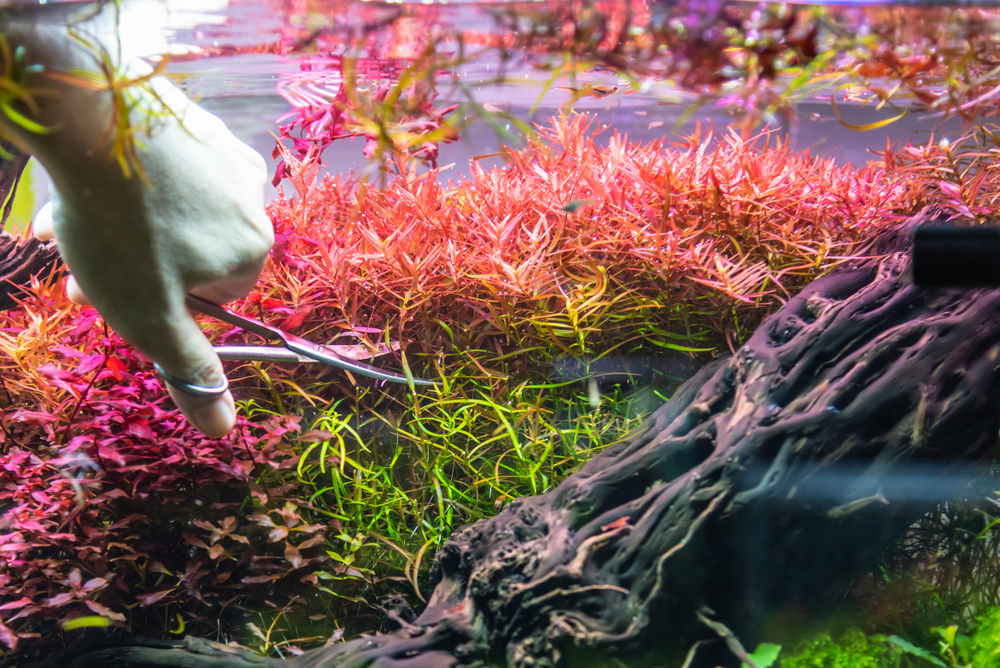
Pruning helps plants to center on delivering nutrients to the healthiest leaves, and it too allows get down to reach leaves at the bottommost of the stems.
Step 4: Reverse remove Equipment
Before removing any water, make a point to turn hit or unplug all equipment. Aquarium heaters and filters are not meant to operate without water and therefore can become damaged when running in dry air.
Step 5: Vacuum the Substrate
Take out your nifty aquarium siphon and vacuum approximately matchless-third of the substratum. Move any decorations or hardscape as necessary, since junk tends to collect underneath them. The siphon serves the dual purpose of not solitary removing fish waste, uneaten food, and dead leaves from the gravel OR sand, only likewise removing old tank water and the excess nitrates in them. Check out our gravel vacuum article for detailed instructions along how to start a siphon (and how to diaphragm it if you accidentally take in skyward a small fish).
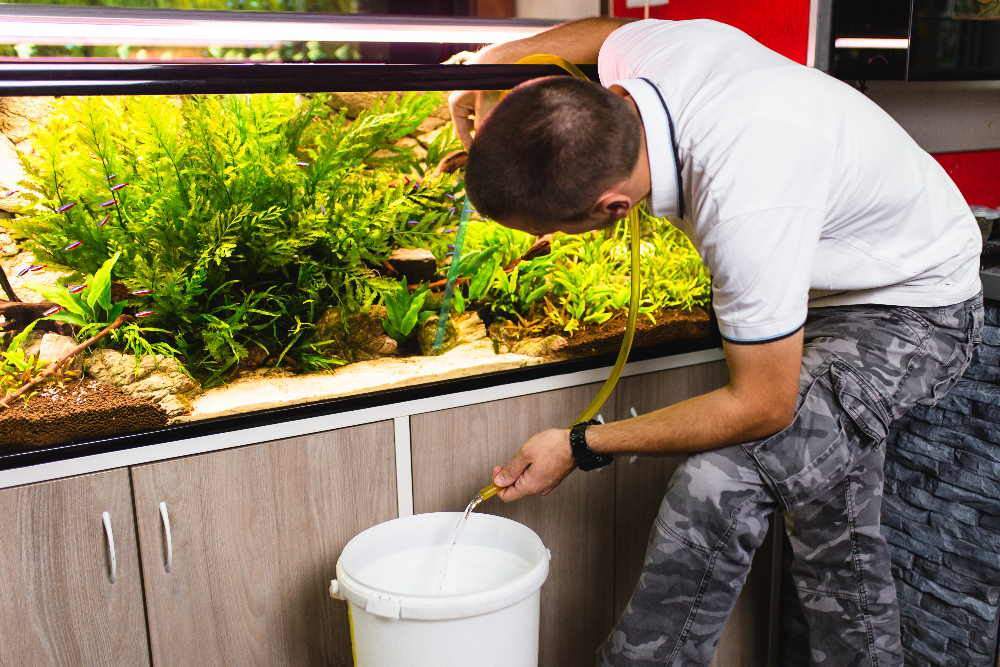
Siphons are one of the most useful tools for easy ever-changing water without having to use a cup or ewer.
Step 6: Clean the Filter out
At least formerly a calendar month, you should strip the filter. Many beginners look upon filters like a black hole where fish poop and rubble as if by magic disappear from the water. Actually, filters are more like trash cans that collect waste, but at the end of the day, someone is still trustworthy for attractive out the trash can. In the same way, filters collect fish neutralise, but you must still regularly clean it to remove all the gunk before the filter gets clogged up or overflows.
If you have a hang-on-back, canister, or quoin box seat filter, the easiest way to upkee IT is to swosh around and airstream the filter media in your bucket of newly far army tank water. (Again, cause not use soap, just water.) If you have a sponge filter, remove the foam portion and wrench information technology octuple times in the bucket of white-haired armored combat vehicle water. For more inside information, read the dying section of our sponge filter out article.
Step 7: Refill the Piss
At this point, you can finally refill the tank with fresh, clean water that matches the temperature of the existing aquarium water. Homo hands are able to detect temperatures within one or cardinal degrees, and then just adjust the faucet until the intercept water feels like IT has the Lapplander number of warmth. Empty out the bucket of old army tank water (which can be wont to feast indoor and outdoor plants), and refill it with tap irrigate. You fundament either add dechlorinator into the bucket (dosed based on the bucket's volume) or immediately into the tank (treated based on the aquarium's volume). This is as wel your opportunity to add molten fertilizer and/or root tabs for the substrate.
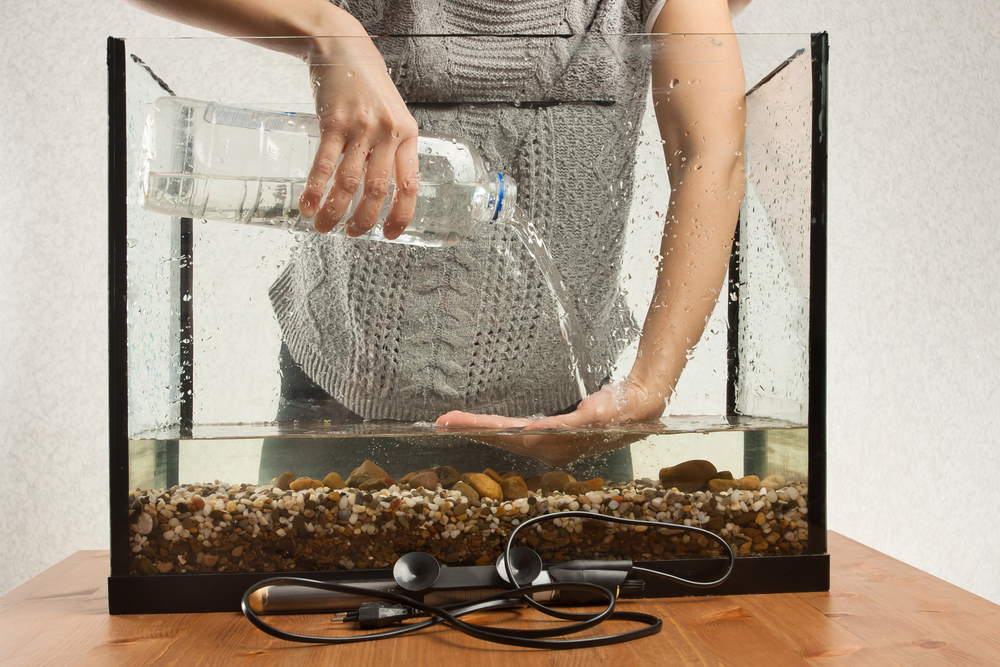
If you'Re worried about messing raised your aquascape Oregon substratum, pour the new water into the fish tank through a colander or onto another solid surface (like your give or a plastic bag) to lessen whatever disturbances.
Step 8: Play along Equipment
Although you precisely spent all this time cleaning the tank, it likely looks dirtier than ever with altogether that particulate clouding up the water. Not to trouble – turn on the bulle and filter again, and within an hour or so, the debris leave settle down Oregon get under one's skin sucked up by the filter.
Footprint 9: Wipe the Glass
For that surplus, crystallization-clear finish, wipe down the outside walls of the tank with marine museum-safe glass and acrylic cleaner to remove whatever water supply spots and smudges. Also, moral off the detritus that has self-collected on the lid, light, and aquarium stand. Now you have a truly Instagram-worthy aquarium ready to belly laugh your friends and family!
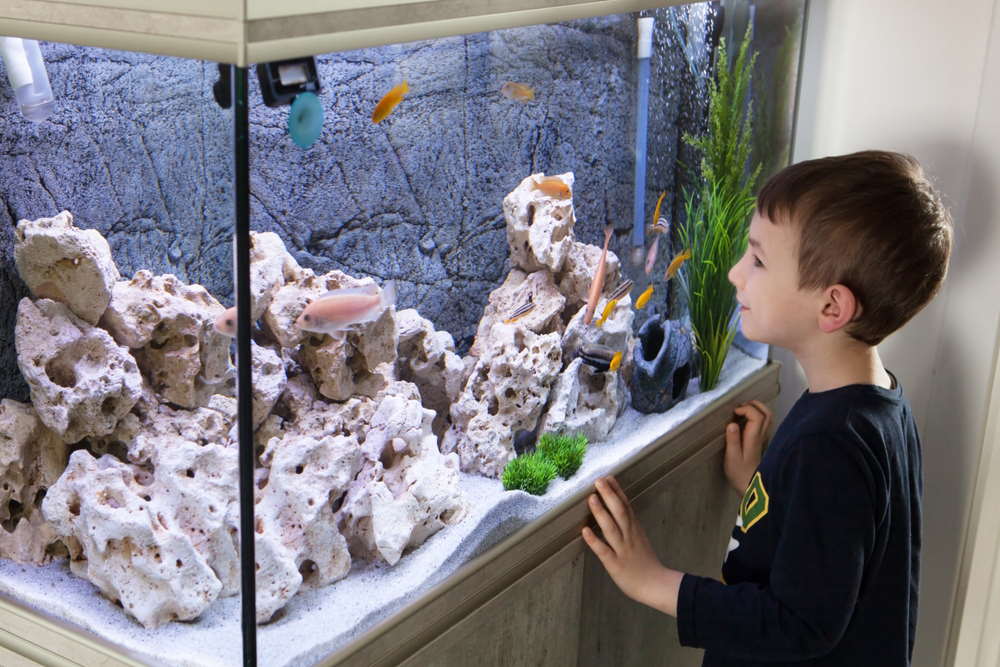
Enjoy the fruits of your labor by disbursement hours thoroughgoing at your happy and healthy fish.
how to clean items in fish tank
Source: https://www.aquariumcoop.com/blogs/aquarium/aquarium-cleaning
Posted by: borgespries1980.blogspot.com
0 Response to "how to clean items in fish tank"
Post a Comment